
The Indonesian Occupational Medicine Updates (IOMU) 2026 is an international scientific conference dedicated to advancing knowledge, practice, and collaboration in the field of occupational health and medicine. Bringing together occupational medicine specialists, healthcare professionals, researchers, policymakers, and industry representatives, this conference serves as a dynamic platform for exchanging insights on current challenges and future directions in workplace health.

Held in Surabaya, Indonesia, IOMU 2026 carries the theme “Occupational Medicine without Borders: Emerging Risks, Evolving Workforces, and Inclusive Collaboration.” The conference reflects the rapidly changing nature of work driven by digitalization, climate change, new technologies, and shifting workforce demographics. Through plenary lectures, symposia, panel discussions, and scientific presentations, participants will explore emerging occupational risks, innovative preventive strategies, and inclusive approaches to protecting worker health across sectors and borders.

Beyond scientific exchange, IOMU 2026 aims to foster meaningful collaboration and professional growth. The conference encourages interdisciplinary dialogue, evidence-based practice, and shared learning to support healthier, safer, and more productive workplaces. By connecting national and international perspectives, IOMU 2026 seeks to strengthen occupational health systems, inspire innovation, and contribute to sustainable workforce well-being in Indonesia and the global community.
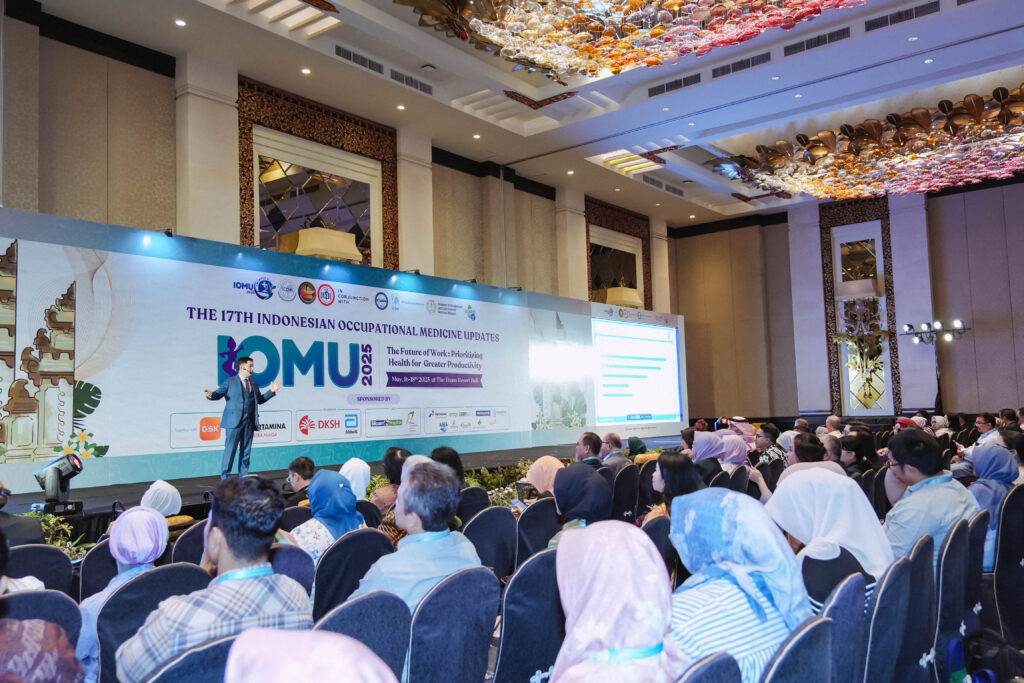
Lectures on topics regarding updates in occupational medicine, including:

  • Adapting Fitness-for-Work Assessments for New Job Categories
  • Beyond “Always On”: Mental Health First Aid for Tech-Enabled Pressure and Burnout
  • Beyond PM2.5: Implementing Green Transition Policies with Modern Exposure & Emissions Monitoring
  • Beyond Posture: New Ergonomic Challenges from Digital and Hybrid Work
  • Categorizing Unstructured Data in Medical Check-Up (MCU) Analysis Using Natural Language Processing (NLP) and Deep Learning
  • Chemical Risks in Evolving Workplaces: New Production Processes and New Exposures
  • Climate Change as an Occupational Hazard: Protecting Outdoor Workers from Emerging Exposures
  • Development of Personalized Risk Assessment: Innovation of Individual Sensors
  • Emerging Occupational Risks and Evolving Workforces: The Importance of Inclusive Collaboration
  • Emerging Psychosocial Hazards and Mental Health
  • Employing Workers with Disabilities: Workplace Accommodation and Risk Management
  • From Tech Tools to Tech Stress: Assessing Psychosocial Risks in Digital Workplaces
  • Future-Proofing Worker Protection: Modernizing Regulations for Human–Technology Interaction and Psychosocial Hazards
  • Health and Productivity Management
  • Implementation of ISO Certification in Upholding Good Occupational Medicine Practices
  • Keeping Workers Well: Integrating Trace Elements in Occupational Health Programs
  • Medical Emergency Response Plan for Disasters due to Climate Change
  • Protecting Workers in a Changing Climate: Practical Adaptation Plans for the Workplace
  • Silent Disability in Workers with Autoimmune Diseases
  • Updates on Occupational Health Surveillance for Modern Workplaces
  • And many other topics